


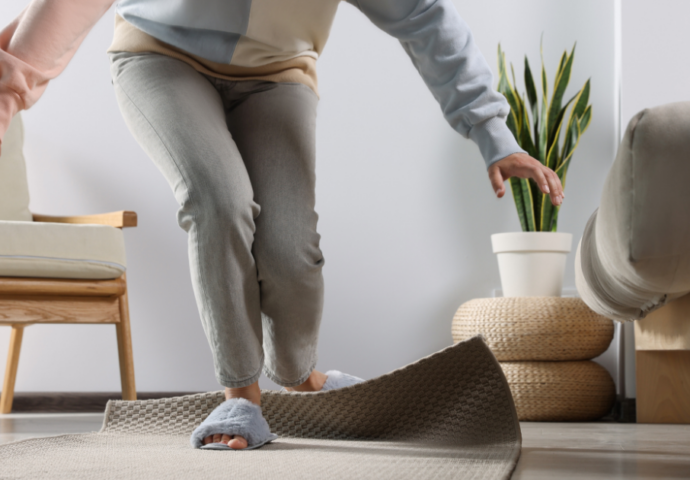
There are many ways to enhance accessibility and improve the safety of a home belonging to someone with Parkinson’s. It may be helpful to have a physical therapist or occupational therapist trained in Parkinson’s disease do a walk-through of your home to identify particular areas of concern.
These are some adaptations to consider for easier living with Parkinson’s:
At the Entrance
As stairs and doors become more challenging, these fixes can make it easier for someone with Parkinson’s to come into their home.
- Add threshold ramps. These make it easier to cross door frames or low steps with a walker or scooter.
- Use lever-style door handles or a keyless door entry system. This can reduce strain on hands affected by rigidity or tremors.
Throughout the Home
Help avoid trip hazards and improve mobility with these changes.
- Remove throw rugs and runners. With an increase in shuffling gait, throw rugs are hazardous and can create a significant fall risk. Reduce the risk of tripping by removing these from your home.
- Install handrails alongside steps or small flights of stairs. If going in and out of your front door or up one level in your home is challenging, adding handrails can help aid your movement.
In the Bedroom
You spend a lot of time in the bedroom, so it’s important that it is a safe space. Consider the following.
- Move the bedroom to the ground floor. This can help minimise daily stair use if balance is an issue.
- Add a bed rail or floor-to-ceiling transfer pole. Both of these tools can make it easier to reposition or get out of bed safely.
- Use motion-sensor lighting in the bedroom. This helps with nighttime mobility while minimising the need to flip a light switch.
In the Bathroom
There’s a high risk of falls on slippery surfaces in the bathroom. Here’s how to make it safer.
- Install grab bars. This is especially important around the toilet and shower: Using grab bars versus towel racks, for example, are more reliable for stability and safety.
- Add a shower seat and bench. Inexpensive ones be bought online or in a store. More extensive bathroom renovations may include step-in tubs or built-in seats.
- Use a toilet riser and a bidet. A toilet riser can make going from sitting to standing less strenuous, whereas a bidet promotes comfortable hygiene.
In the Kitchen
Simplify meal prep and other kitchen tasks by including more adaptive tools in the kitchen.
- Incorporate seated workstations or sturdy stools in the kitchen. Sitting often decreases tremors, making it easier to do fine motor tasks, like chopping vegetables.
- Install easy-access kitchen cabinets and counters. Also, keep frequently used items within arm’s reach to reduce the need for stepladders, which can increase fall risk when your balance is off.
- Use weighted utensils and a one-handed cutting board. Kitchen tools like these can help support cooking and eating when you have hand tremors.
Smart Home Technology for Parkinson’s
Advances in home technology are making it easier than ever to support safety and independence for people with Parkinson’s. Here’s what experts recommend adding to the home.
- Timed medication dispensers. These devices help ensure the right medication is delivered at the correct time each day. They can be set up in advance and will automatically dispense the pre-specified dose at regular intervals. Because Parkinson’s can affect memory and cognitive function, this technology helps ensure doses aren’t missed.
- Voice-activated assistants. Artificial Intelligence (AI) voice assistants like Alexa, Siri, and Google Assistant can be connected to smart speakers placed throughout your home. Voice-activated assistants can be used to set reminders about medication, exercise, or appointments. These assistants can also type emails or texts for you, make phone calls, activate emergency services, turn on and off lights, and even lock your front door.
- Medical alert systems. If you can’t reach your phone, a medical alert system like can be lifesaving. You can set it up to contact an emergency contact, like a family member or emergency services. Some systems can even auto-detect a fall or near-fall using built-in accelerometers.
- Doorbell cameras. Seeing who is at the door with a camera like those from Ring can reduce the urge to rush to answer it, which can help prevent falls.
- Remote thermostats or light switches. These simplify tasks that require fine motor skills. Using a remote tool like Google Nest to change the temperature in your home or turn a light on and off with smart lights can help you conserve energy and reduce the risk of falling.
Source:
Original article by Cheyenne Buckingham, HealthCentral