


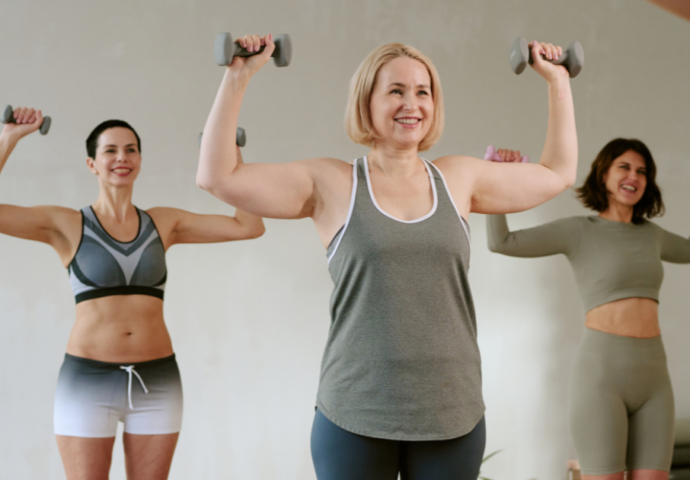
Exercise is one of the most effective ways for people living with Parkinson’s to maintain mobility, improve physical function, and enhance quality of life. Research shows that regular exercise can help improve walking, balance, strength, flexibility, posture, endurance and confidence while reducing the risk of falls.
However, not all exercise should be performed at the same intensity. Like medication, exercise should be individualised. The right level depends on a person’s symptoms, fitness, stage of Parkinson’s, balance, other health conditions, and previous exercise experience.
Beginning at an appropriate level and progressing gradually allows the body and brain to adapt safely while reducing the risk of injury, excessive fatigue, or discouragement.
A well-rounded exercise program should include six key components:
- Aerobic fitness
- Strength
- Flexibility
- Mobility
- Balance and agility
- Functional movement
Each component can be performed at different levels depending on your individual condition.
Many people think exercising harder always produces better results. While challenging yourself is important, exercising at the right level is far more beneficial than exercising beyond your current ability.
For people with Parkinson’s disease, exercising at an appropriate level helps to:
- Improve movement quality before increasing intensity.
- Reduce the risk of falls and injury.
- Build confidence and motivation.
- Improve long-term exercise adherence.
- Allow gradual progression as fitness improves.
- Safely challenge the brain as well as the muscles.
As your body adapts, your exercise program should also change. This gradual increase is known as progression.
Aerobic Exercise
Aerobic exercise improves the efficiency of your heart, lungs and muscles while helping maintain walking endurance. Some examples of aerobic exercise are:
- Walking or running
- Stationary cycling
- Swimming
- Dancing
- Rowing
- Elliptical trainer
- Boxing
Below are some examples of aerobic exercise levels
Level 1 – Low Intensity (easy)
Suitable for people beginning exercise or those experiencing fatigue. An example would be: Comfortable walking or gentle cycling for 5-20 minutes and be able to easily hold a conversation at the same time.
The benefits are;
- Building confidence
- Improving circulation
- Reducing stiffness
- Developing an exercise routine
Level 2 – Moderate Intensity (medium)
This is the recommended level for most people who have an active lifestyle with some regular exercise. Brisk walking, cycling with light resistance or water exercise for 20-40minutes. You should notice faster breathing but still be able to talk.
The benefits are;
- Improved endurance
- Improved walking speed
- Enhanced cardiovascular fitness
- Improves mood and sleep
Level 3 – Vigorous Intensity (hard)
Suitable for people with good balance and fitness, under professional guidance if required.
Some examples would be very fast walking, hill walking, running or interval cycling with resistance. Having a conversation becomes difficult and you may only get a couple of words out because breathing is much harder.
The benefits are;
- Greater improvements in cardiovascular fitness
- Improved exercise capacity
- Better physical conditioning
Most people with Parkinson’s disease should aim to include:
- Aerobic exercise: 150 minutes of moderate-intensity activity each week (or as tolerated).
- Strength training: 2–3 sessions each week.
- Flexibility: Most days of the week.
- Mobility exercises: Daily.
- Balance and agility: At least 2–3 times each week, with more frequent practice if balance is impaired.
- Functional movement: Incorporated into everyday activities.
The best exercise program is one that is safe, enjoyable, progressive, and performed regularly.
And remember;
- Exercise should be performed at a level that is appropriate for your current ability.
- Progress gradually as your strength, confidence and fitness improve.
- Include aerobic, strength, flexibility, mobility, balance and functional exercises in your weekly routine.
- Good technique is more important than high intensity.
- Regular exercise is one of the most effective ways to maintain independence and improve quality of life with Parkinson’s disease.
Over the coming newsletters, we’ll explore a variety of exercises, explain how to progress them through different levels, and highlight the benefits each can offer to help you exercise safely and get the most from your Parkinson’s exercise program.
References:
- American College of Sports Medicine. (2021). ACSM’s Guidelines for Exercise Testing and Prescription (11th ed.).
- Ellis, T., Rochester, L. (2018). Mobilizing Parkinson’s Disease: The Future of Exercise. Journal of Parkinson’s Disease, 8(s1), S95–S100.
- Goodwin, V. A., Richards, S. H., Taylor, R. S., Taylor, A. H., & Campbell, J. L. (2008). The effectiveness of exercise interventions for people with Parkinson’s disease: A systematic review and meta-analysis. Movement Disorders, 23(5), 631–640.
- Parkinson’s Foundation. Exercise Recommendations for Parkinson’s Disease.
- Schenkman, M., Hall, D., Kumar, R., & Kohrt, W. M. (2012). Endurance Exercise Training to Improve Economy of Movement in People with Parkinson Disease. Archives of Physical Medicine and Rehabilitation, 93(9), 1494–1502.
- World Health Organization. (2020). WHO Guidelines on Physical Activity and Sedentary Behaviour.