

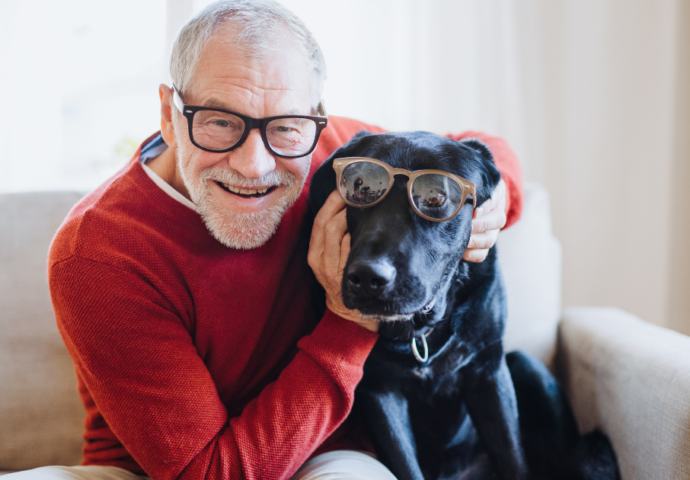
Research suggests that companion animals – particularly dogs – can have a positive impact on both physical and emotional wellbeing.
Studies have found that spending time with a dog can reduce levels of the stress hormone cortisol while increasing oxytocin, a hormone associated with bonding, relaxation, and feelings of safety.
For people living with Parkinson’s disease (who commonly experience anxiety) a dog’s steady companionship can provide emotional comfort, reduce feelings of loneliness, and offer a reassuring sense of routine and purpose.
Caring for a dog encourages regular physical activity, social interaction, and engagement in meaningful daily tasks, all of which are associated with improved mental health and quality of life.
Gentle interactions such as patting, grooming, or simply sitting quietly with a dog can also promote mindfulness by drawing attention to the present moment rather than anxious thoughts.
Although a dog is not a replacement for medical or psychological treatment, growing evidence suggests that companion animals can be an important part of a holistic approach to wellbeing, helping many people with Parkinson’s disease feel calmer, more connected, and better able to cope with the challenges of living with a long-term neurological condition.
References:
Boldig, C.M. and Butala, N. (2021) ‘Pet therapy as a nonpharmacological treatment option for neurological disorders: A review of the literature’, Cureus [Preprint]. doi:10.7759/cureus.16167.
Mittly V, Farkas-Kirov C, Zana Á, Szabó K, Ónodi-Szabó V, Purebl G. The effect of animal-assisted interventions on the course of neurological diseases: a systematic review. Syst Rev. 2023 Nov 25;12(1):224. doi: 10.1186/s13643-023-02387-y. PMID: 38007472; PMCID: PMC10675848.
Team, P. (2025). The Healing Bond: How Pets Support Mental Health and Wellbeing | Pacific Mental Health. In Pacmh.org. https://pacmh.org/the-healing-bond-how-pets-support-mental-health-and-wellbeing/