

Parkinson’s disease is a neurodegenerative disorder that causes damaging inflammation in the brain. Yet, scientists who study Parkinson’s will tell you that your gut health can be involved, too – and that your daily diet may even affect your risk of Parkinson’s or its progression.
In fact, emerging evidence increasingly suggests that gastrointestinal (GI) issues, including nausea, constipation, and bloating, frequently precede the classic motor symptoms of Parkinson’s, often by decades, according to the Parkinson’s Foundation. This may be due to an inflammatory response that’s caused by changes in gut bacteria, research shows.
What you eat influences the types and amounts of microbes, both good and bad, that live in your digestive tract. An imbalance there, called dysbiosis, may lead to an increase in pro-inflammatory chemicals, which may cause inflammation throughout your body and brain, a recent study published in npj Parkinson’s Disease shows.
Now consider that up to 80% of people with Parkinson’s are known to have gut issues – an association so strong that some experts are now asking if following an anti-inflammatory diet could lessen the severity of Parkinson’s symptoms or even delay their onset.
Brain-Gut Connection
Your brain and intestines are connected in ways that you might never imagine: They send signals back and forth to one another, something known as the gut-brain axis, according to the Cleveland Clinic.
There are two possible ways a gut imbalance can lead to brain inflammation, says Michael Kaplitt, M.D., Ph.D., a neurosurgeon and the Director of Parkinson’s Disease and Movement Disorders at Weill Cornell Medicine and New York-Presbyterian in New York City.
The first “…is dysbiosis that causes more generalised body inflammation and illness, which could predispose the brain to being more sensitive to Parkinson’s, or to progress more quickly,” he explains.
The second way is when that inflammation spreads through your vagus nerve, a major nerve that connects your brain to your gut and many other organs, Dr. Kaplitt says. “There’s evidence from a variety of both human and animal studies that supports the idea that – at least in some patients – that pathology in the gut may actually spread through the vagus nerve into the brain to eventually cause Parkinson’s disease,” he notes.
Dr, Kaplitt also clarifies that while Parkinson’s is an inflammatory disorder, “…it’s not like arthritis, where inflammation is the primary cause and the primary reason why people have the problem.” If that were the case, if people with Parkinson’s suddenly started taking anti-inflammatory drugs their Parkinson’s would immediately get better – but it doesn’t.
“Having said that, one of the most important areas of research right now in Parkinson’s disease is inflammation,” Dr. Kaplitt says. “It seems to be a very critical factor, influencing potentially whether or not someone develops Parkinson’s and how rapidly and severely it progresses.”
Can the Right Diet Reduce Parkinson’s Risk?
So, if an imbalance of gut bacteria causes GI inflammation, and dysbiosis there is associated with the onset and symptoms of Parkinson’s disease, can changing how you eat, or even adding supplements to your daily meals, correct that imbalance and help protect your brain?
The science is still young on this, so not every expert agrees on how strong the association is between diet and the slowing, or even stopping, of Parkinson’s onset and progression. Still, Jeff M. Bronstein, M.D., Ph.D., a Professor of Neurology and the Fred Silton Family Chair of Movement Disorders at the University of California in Los Angeles believes that eating a Mediterranean diet, specifically, can play a role in both Parkinson’s prevention and symptom progression.
“This diet, which is believed to be anti-inflammatory, reduces the risk of Parkinson’s,” says Dr. Bronstein. “People eating a Mediterranean diet for a long time can have up to half the risk of developing Parkinson’s.”
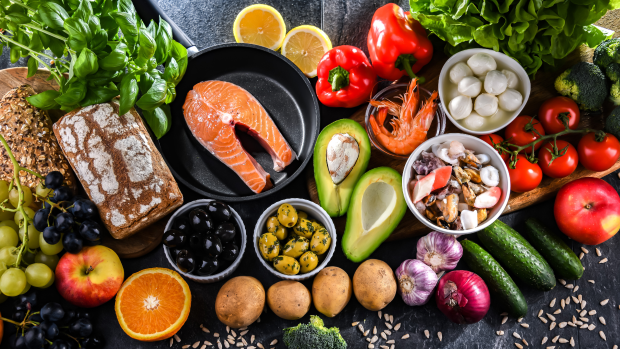
The Mediterranean diet consists of olive oil, fruits, vegetables, whole grains, nuts, and fish. Another hallmark of this dietary approach is that it focuses on whole foods and shuns overly processed foods that are associated with the Western diet, according to the Cleveland Clinic.
A review of the evidence supports Dr. Bronstein’s view; it shows that the Mediterranean way of eating could help protect against Parkinson’s onset and progression, and the review’s authors attribute those benefits to the anti-inflammatory, antioxidant-rich foods in the diet. They recommend starting a Mediterranean diet from an early age – and add that it’s never too late to adopt it – since imbalanced and negative gut-related changes are often seen decades before the motor symptoms of Parkinson’s first emerge.
While he stops short of recommending the Mediterranean diet specifically, Dr. Kaplitt says he does tend to see sees improvements in his Parkinson’s patients’ health and Parkinson’s symptoms when they regularly consume healthier foods, including those promoted by the Mediterranean diet. Still, it’s a complicated issue, he notes.
“The evidence is not great that improving your gut health can actually slow Parkinson’s or stop the disease itself,” he clarifies. “But [eating healthfully] does make people better because it makes you healthier, overall.”
Dr. Kaplitt says there is a lot of variability in the research, and more studies need to be done, before we have a definitive understanding about how impactful diet truly is on Parkinson’s.
“As we understand more about the questions we need to ask, the studies can get better and allow us to really understand this better,” he adds. “There’s no question that improving your gut health does improve symptoms in Parkinson’s – but [again], the studies right now are not great.” He hopes future studies will give us concrete answers.
Source: